Built to Last, Built to Adapt: Modular Design at HMi Elements
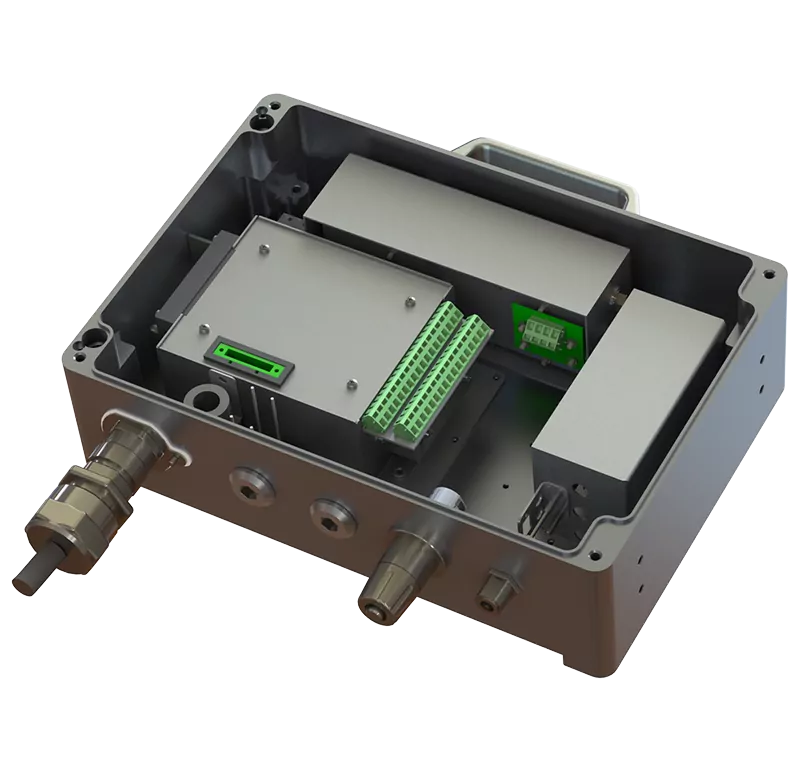
When a hazardous area HMI fails offshore or on a remote well site, downtime is not measured in minutes. It is measured in lost production, mobilisation costs, and safety risk. HMi Elements set out to solve this differently, by designing certified Zone 1 and Zone 2 units that can be maintained in the field rather than shipped back to the factory every time a component fails.
The 490-Z1: unique in Zone 1
The 490-Z1 is unique. Few Zone 1 certified HMIs available today offer the same modular maintenance capability. Achieving that while meeting the full weight of ATEX, IECEx, and AEx certification requirements took HMi Elements' R&D team over two and a half years of development, requiring unique proprietary components including a hand-built dual-redundant cable loom carrying power, signal, and high-speed video between the front and rear of the unit.
The practical benefit is significant. Individual modules can be changed out in the field by customers with the right technical capability, reducing downtime and avoiding the cost of freighting an entire unit from a remote or offshore location. In many cases, the freight and logistics cost of a single return from an offshore or remote installation can offset the entire upfront price difference between a modular solution and a cheaper non-modular alternative. That is a real-world example of where total cost of ownership matters more than purchase price.
The advanced design also means these units are built to perform across very harsh environments, typically for more than a decade, with processors upgradeable when better options become available, further reducing lifecycle costs.
The 1302-Z2: the same philosophy in Zone 2
The 1302-Z2 brings the same approach to Zone 2. The Embedded Health Monitor enables on-site diagnostics and where a module is identified as faulty, that module rather than the entire unit can be returned to HMi Elements for maintenance, cutting cost and turnaround time significantly.
Every Unit Tested. Every Time.
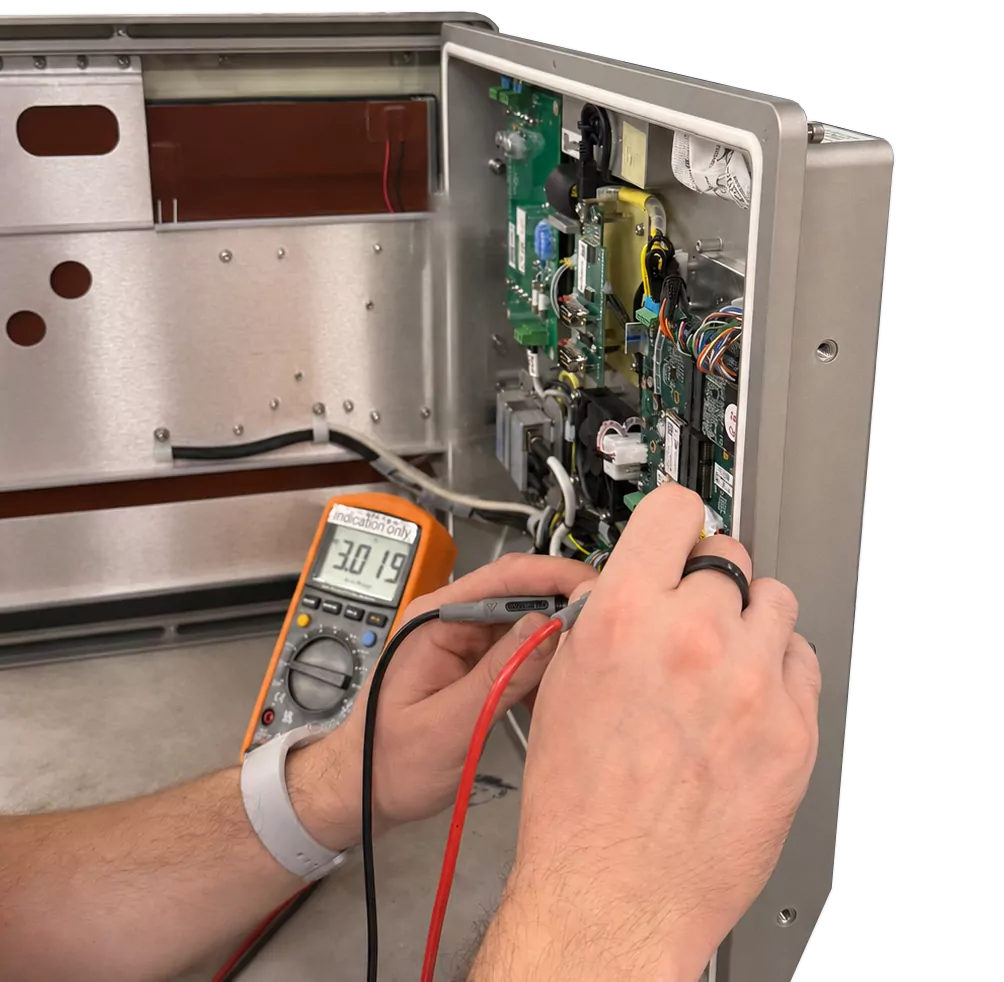
In hazardous environments where explosion and fire risk bring a heightened level of danger to personnel, using only certified equipment is not a preference. It is a requirement. But certification alone does not guarantee that every unit leaving a factory meets the standard it was designed to. That assurance comes from inspection and test.
At HMi Elements, a structured and prescribed inspection and test process is applied at every stage of the manufacturing cycle. It begins before production starts. Raw materials undergo stringent inspection and testing before being accepted to stock, with many supplied alongside a Certificate of Conformance from the supplier as evidence of source consistency.
During manufacture, subassemblies are inspected and tested before being incorporated into a product. Once a unit is fully assembled, it undergoes two independent cycles of full inspection and testing, either side of a 12 hour elevated temperature soak test run under diagnostics. This approach ensures a high level of confidence in final product compliance before anything leaves the facility.
Operating under EN ISO 80079-34, the hazardous area quality standard, a high level of traceability is maintained throughout. Inspection and test reports are retained long after a product has left the factory, providing a reference for units returned from the field for maintenance or upgrade. When a unit comes back, new inspection and test reports are added to the originals under the product serial number, preserving a complete history across the product lifetime. Critically, every unit returned for maintenance or upgrade undergoes the same full inspection and test process as a newly manufactured unit before it is returned to service. There are no shortcuts for returned units.
External oversight reinforces this further. HMi Elements holds EU, UKCA, and international quality assurance approvals, audited annually by DNV and Intertek. Quarterly audits by our notified bodies confirm that testing and inspection remain in order and in full compliance with the original certification requirements.
Every product that passes through our facility, whether new, returned for maintenance, or upgraded, undergoes the same process. No exceptions
Windows 10 Support Update

Following Microsoft's end-of-life plans, Windows 10 LTSB licences are no longer available to purchase from 31 July 2026. All new orders requiring Windows 10 will be supplied with Windows 10 IoT Enterprise LTSC.
LTSC, or Long-Term Servicing Channel, is Microsoft's operating system variant designed specifically for embedded and industrial computing environments. Unlike standard Windows releases, LTSC receives no feature updates, only security patches, ensuring stability and consistency over a long deployment lifecycle. Windows 10 IoT Enterprise LTSC remains supported by Microsoft until January 2032, making it well suited to the long service life expected of certified hazardous area computing equipment.
If you have any questions about how this affects your current or future orders, contact us at [email protected]